
Every business owner hits a bookkeeping wall eventually — usually not because they’re careless, but because they’re busy running the business. This page is a practical guide to the bookkeeping problems Ontario small businesses hit most: what each one looks like, why it happens, and how it actually gets fixed. Find yours below.
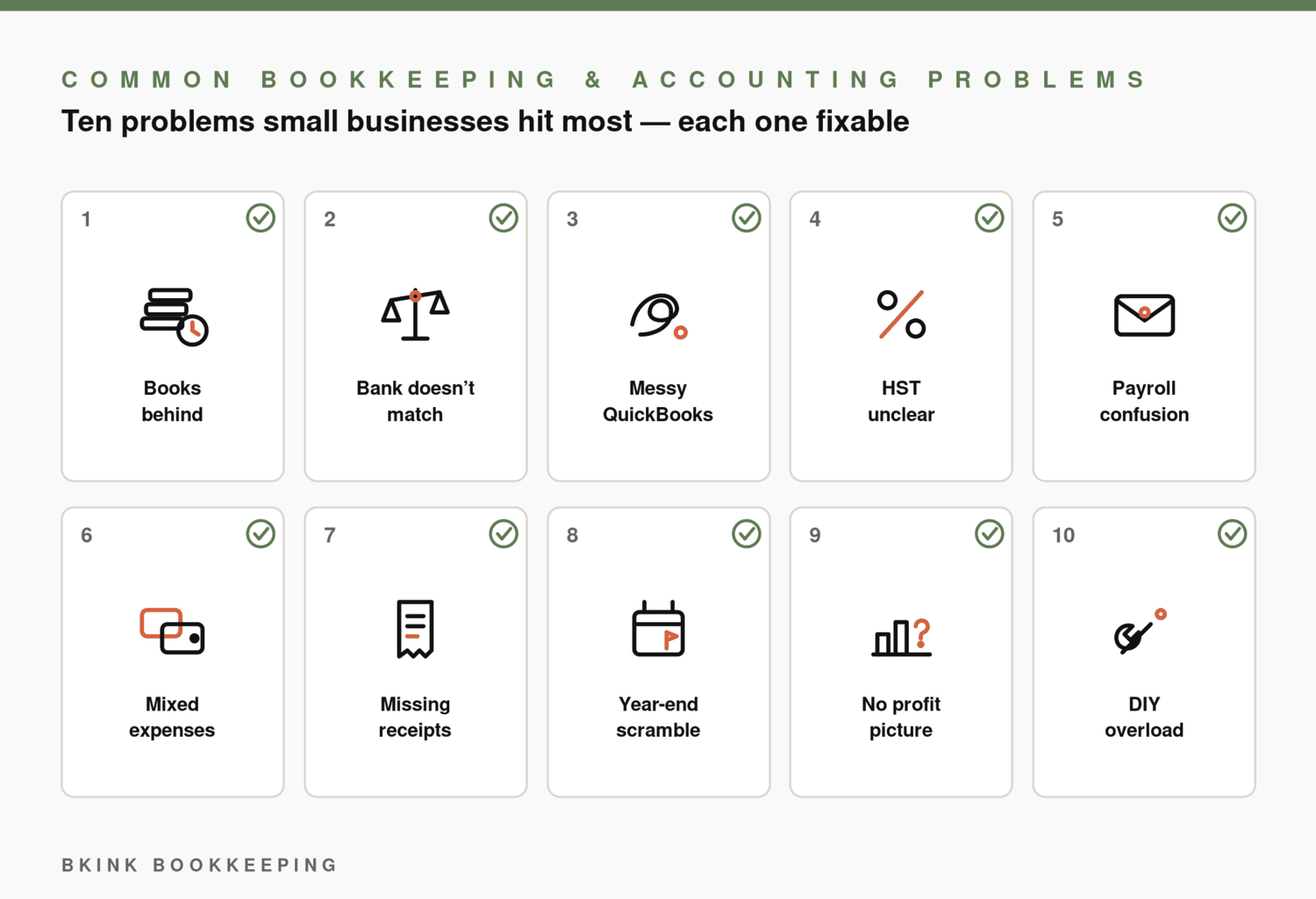
1. “My books are months behind.”
What it looks like: unopened bank statements, a growing pile of receipts, invoices you’re not sure were ever recorded — and a knot in your stomach every time someone says “year-end.”
Why it happens: bookkeeping is the first thing dropped when the business gets busy — and the longer it slips, the bigger the job looks, so it slips further.
How it gets fixed: catch-up bookkeeping. The backlog is entered, categorized, and reconciled month by month until you’re current — then simple monthly upkeep keeps you there. It’s routine work for a bookkeeper, and it’s almost always faster than the pile suggests. See Bookkeeping Services.
2. “My bank balance and my books don’t match.”
What it looks like: QuickBooks says one number, the bank says another, and you’re not sure which to trust.
Why it happens: unreconciled months, duplicate bank-feed entries, transactions recorded manually and imported, or timing differences no one cleared.
How it gets fixed: bank reconciliation — matching every book entry to the bank line by line, clearing duplicates, and closing each month so the two agree. Once your file reconciles monthly, this problem stays gone. See Bookkeeping Services and the free Cleanup Checklist for QuickBooks Online.
3. “My QuickBooks file is a mess.”
What it looks like: a chart of accounts with 200 lines, “Ask My Accountant” balances, negative balances that make no sense, undeposited funds that never clear.
Why it happens: the file was set up quickly (or inherited), then years of workarounds accumulated on top.
How it gets fixed: a cleanup for QuickBooks Online — chart of accounts rationalized, mysteries investigated and cleared, balances corrected, bank feeds re-connected properly. See our dedicated Cleanup for QuickBooks Online service, part of our Support for QuickBooks Online.
4. “I don’t really know where I stand with HST.”
What it looks like: filing from bank-statement math, guessing at input tax credits, or setting nothing aside and wincing at remittance time.
Why it happens: HST isn’t tracked as you go, so every filing is a reconstruction.
How it gets fixed: HST tracked inside your books all year — the right rate applied automatically, credits captured with receipts attached, returns reconciled before filing. Start with our HST Tracking Checkup to see where you stand, or go straight to HST Filing Services.
5. “Payroll deductions confuse me.”
What it looks like: uncertainty about CPP, EI, and tax withholdings; remittance deadlines that sneak up; T4 season dread.
Why it happens: payroll rules are genuinely fiddly, and the CRA’s penalties for late source deductions are among the least forgiving.
How it gets fixed: run payroll on a proper system with deductions calculated and remitted on schedule, and T4s produced at year-end. See Payroll Services and the free Payroll Deductions Guide.
6. “Personal and business expenses are mixed together.”
What it looks like: one card for everything, owner draws recorded as expenses (or not at all), and no clean picture of what the business actually earns.
Why it happens: nearly every business starts this way — separation is a habit no one teaches.
How it gets fixed: separate accounts going forward, and a cleanup that properly classifies the history — owner transactions to the right equity accounts, business expenses documented so deductions hold up. See Bookkeeping Services.
7. “I can’t find receipts when I need them.”
What it looks like: a shoebox, a glovebox, seventeen email folders — and nothing findable when a specific receipt matters.
Why it happens: no capture habit at the moment of purchase.
How it gets fixed: receipts photographed or forwarded as they happen and attached to the matching transaction in QuickBooks Online, so documentation lives with the entry it supports. Your books become self-documenting. See Support for QuickBooks Online.
8. “Year-end is always a scramble.”
What it looks like: your accountant’s checklist arrives and triggers weeks of archaeology; filing deadlines get extensions; last year’s mess repeats.
Why it happens: year-end is only hard when the year behind it wasn’t kept current.
How it gets fixed: monthly bookkeeping makes year-end a handoff, not a project — reconciled books, organized documents, clean working papers ready for your accountant. See Corporate Year-End Support and Bookkeeping Services.
9. “I have no idea if I’m actually making money.”
What it looks like: revenue comes in, the account never feels comfortable, and you couldn’t say which work is profitable.
Why it happens: without current books there are no real reports — so decisions run on gut feel.
How it gets fixed: current, reconciled books produce monthly statements you can actually read: what you earned, what you spent, what’s owed to you and by you. That’s the foundation every pricing and hiring decision should stand on. See Bookkeeping Services.
10. “I tried doing it myself and I’m over my head.”
What it looks like: you bought the software, watched the tutorials, and the books still don’t feel right — and every hour on them is an hour off the business.
Why it happens: bookkeeping is a real skill, and owner time is the most expensive way to buy it.
How it gets fixed: hand it to someone who does it every day. A good bookkeeper costs less than the errors, missed credits, and evenings it replaces. That’s the honest pitch. See Pricing for how our packages work.
Don’t see your problem here?
If your situation doesn’t fit a box above — or fits three of them at once — that’s normal. Schedule a no-pressure consultation, describe what’s going on in plain English, and we’ll tell you honestly what it would take to fix.
This page is general information for Ontario businesses, not tax, accounting, or legal advice. Every situation is different — talk to us (or your accountant) about yours.